ETFE in sports facilities: the material transforming leisure architecture
Ethylene tetrafluoroethylene — better known by its acronym ETFE — has moved in the last two decades from being a niche material to becoming the defining skin of covered pools, water parks and large recreational facilities. Lightweight, translucent, durable and capable of enclosing large-scale spaces without the visual heaviness of glass or concrete, ETFE has changed the rules of the game in leisure architecture.
Materials · Aquamijas Extension · Fuengirola, MálagaWhat ETFE is and why it matters
ETFE is a fluorinated polymer manufactured in sheets barely 0.2 mm thick. Each sheet on its own has little structural strength, but when arranged in cushions — two or three layers sealed together and pressurised with air — the membrane acquires a rigidity and load-bearing capacity that allows spans of tens of metres to be covered without intermediate structure. The result is a transparent or translucent roof that weighs less than 1% of its glass equivalent.
The advantages over other roofing solutions are numerous: it transmits between 40 and 95% of natural light depending on how the sheets are treated, it is self-cleaning thanks to its non-stick surface, it withstands extreme temperatures without degrading, and its service life exceeds 25–30 years with no intensive maintenance. When damaged, the cushions are repaired or replaced locally without dismantling the entire roof.
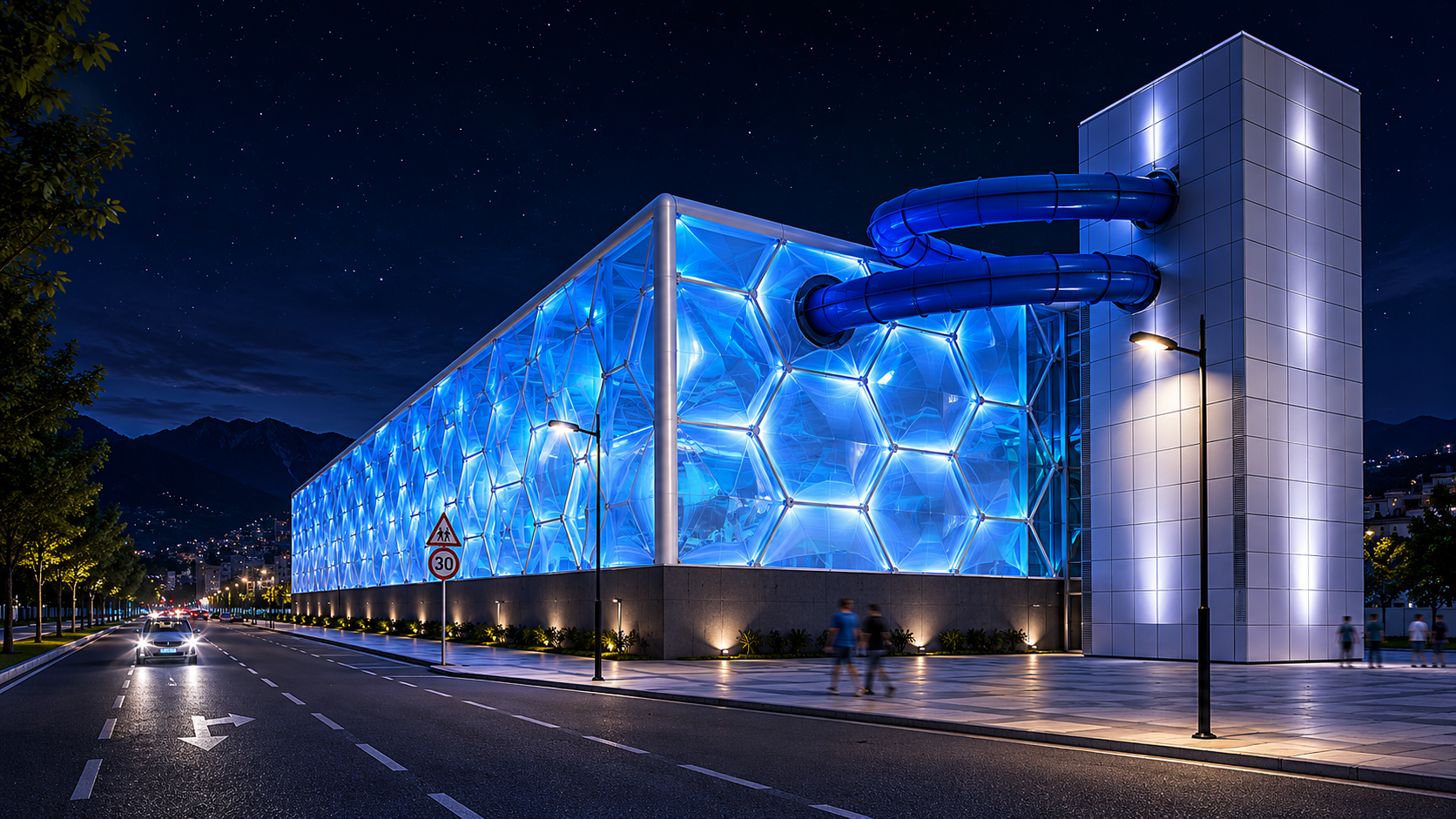
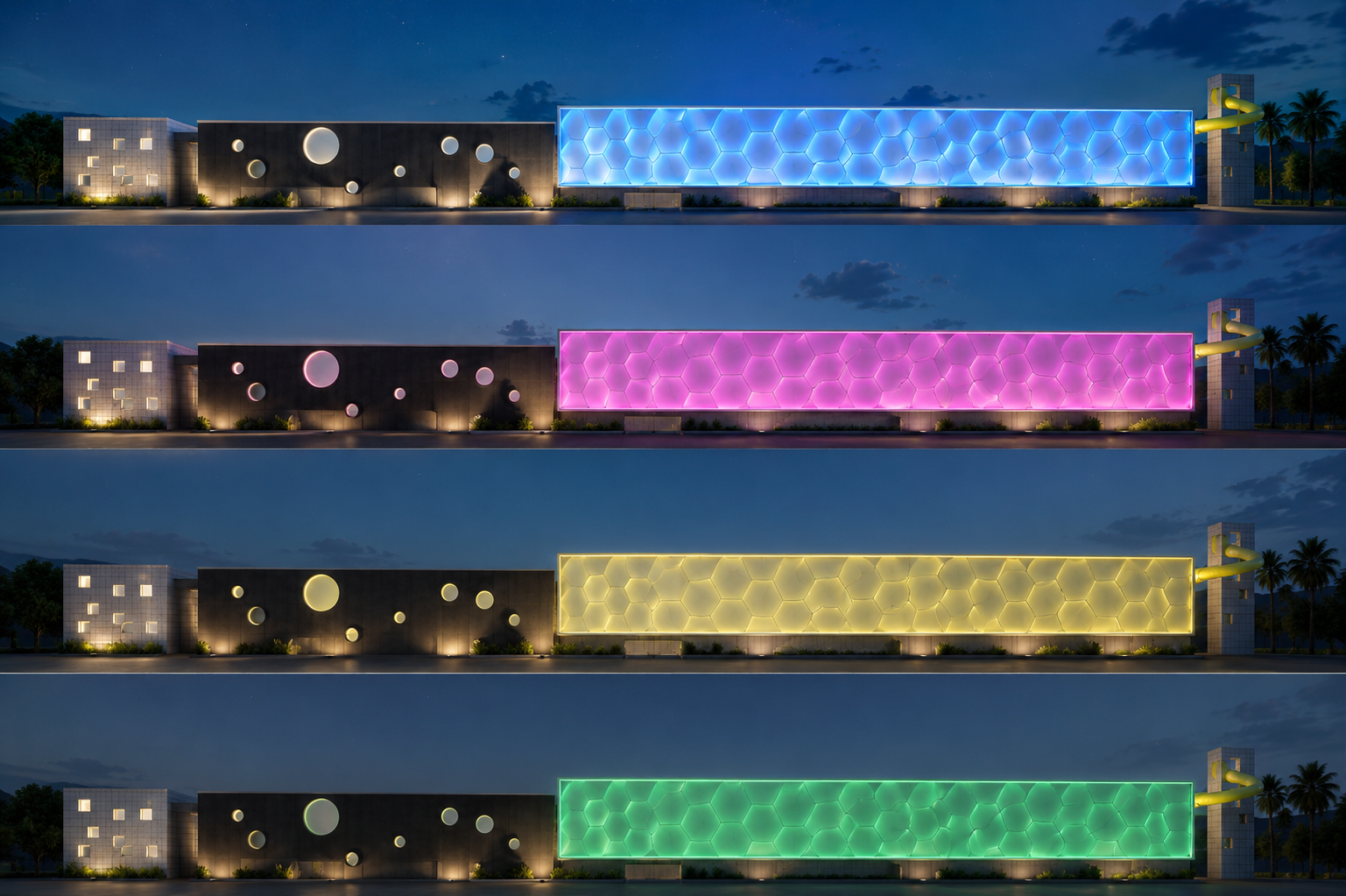
But there is one quality that no other material replicates with the same ease: its nocturnal behaviour. By day, the ETFE roof is a translucent skin that filters sunlight and generates a bright, warm interior. At night, when the building is lit from within, the membrane becomes a giant lantern emitting diffuse light outwards, transforming the building into a visual landmark in the urban landscape.
"A building with an ETFE roof reads in a radically different way by day and by night. That duality is a design tool, not a side effect."
International references: how ETFE redefined the sports facility
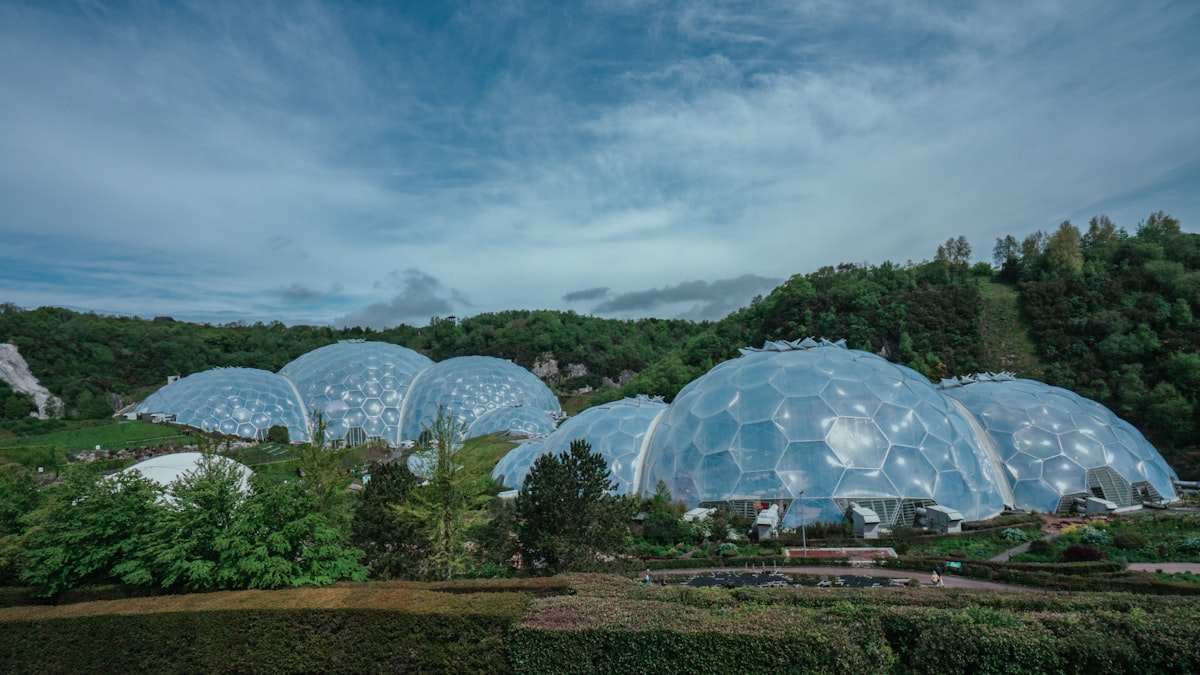
The turning point was the Eden Project in Cornwall (2001), where Nicholas Grimshaw covered two geodesic biomes of monumental scale with ETFE cushions. The image of those translucent spheres against the English landscape went around the world and proved that the material could handle scales and geometries that had previously been unthinkable.
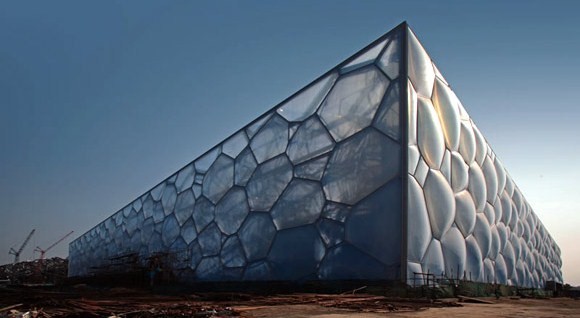
A few years later, for the Beijing 2008 Olympic Games, PTW Architects and Arup designed the National Aquatics Center — popularly known as the Water Cube — covering the entire envelope with more than 3,000 ETFE cushions. The building, which hosted the swimming and water polo competitions, became the symbol of a new generation of sports facilities where architecture was as much a protagonist as the sport itself.
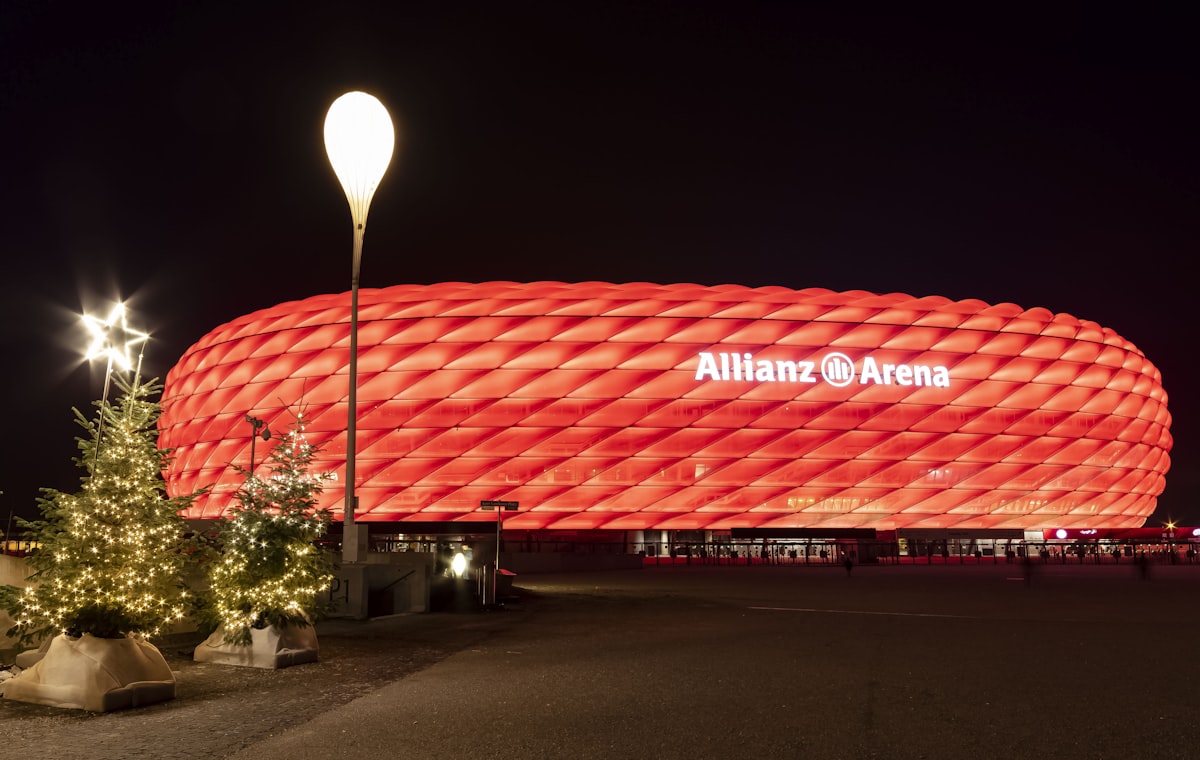
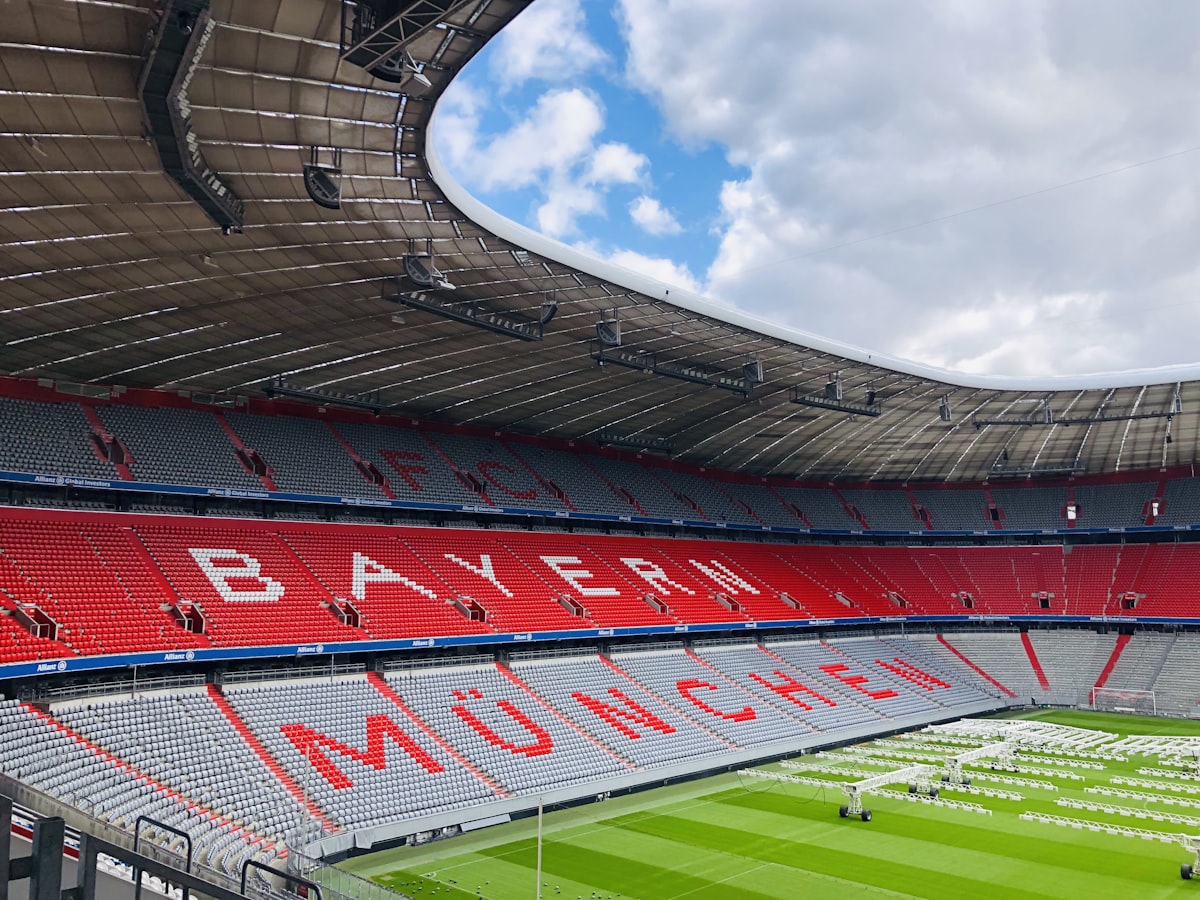
In the stadium world, the Allianz Arena in Munich (Herzog & de Meuron, 2005) introduced another variant: LED-backlit ETFE cushions that allow the colour of the entire façade to be changed according to which team is playing at home. This capacity for chromatic transformation has since inspired countless sports venues worldwide, which see ETFE not just as a building material but as a tool for identity and spectacle.
ETFE in water parks and leisure centres: a logical step
The transition of ETFE from large stadiums to leisure and water park facilities is a natural evolution. These programmes share with stadiums the need to cover large surfaces without intermediate supports, but add a further requirement: interior environmental control. A covered pool or water park under an ETFE membrane can benefit from filtered natural light — reducing the need for artificial lighting and improving user wellbeing — while keeping the enclosure protected from wind and rain without the visual weight of an opaque roof.
In water parks, the ETFE's capacity to create interior-use spaces that feel like exterior spaces also solves one of the great problems of these facilities in Atlantic or mountain climates: seasonality. A traditional open-air water park operates for barely four months a year. Covered with ETFE, it can run for twelve months without users losing the sense of being in an open, bright space.
The Aquamijas project: ETFE on the Costa del Sol
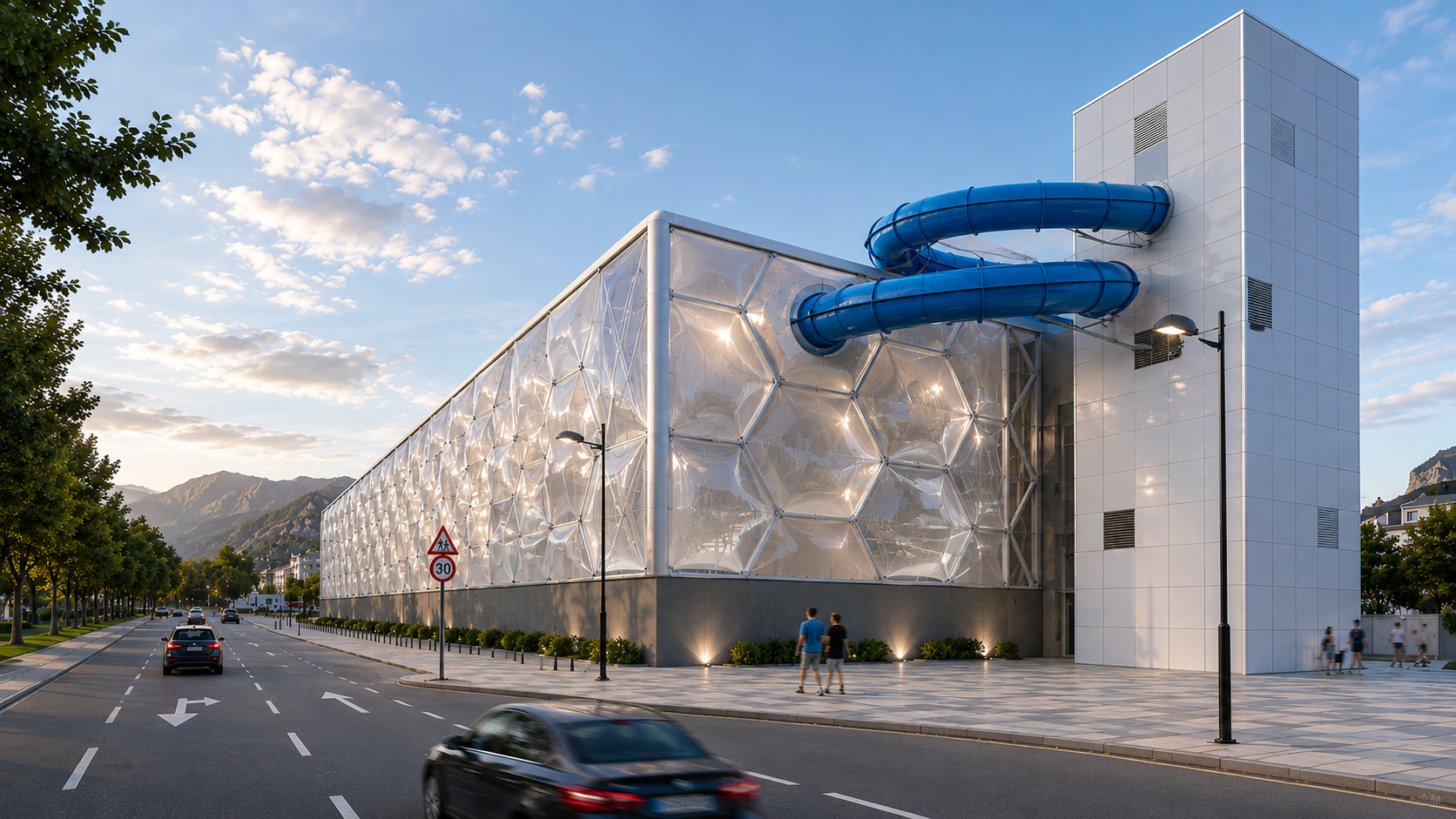
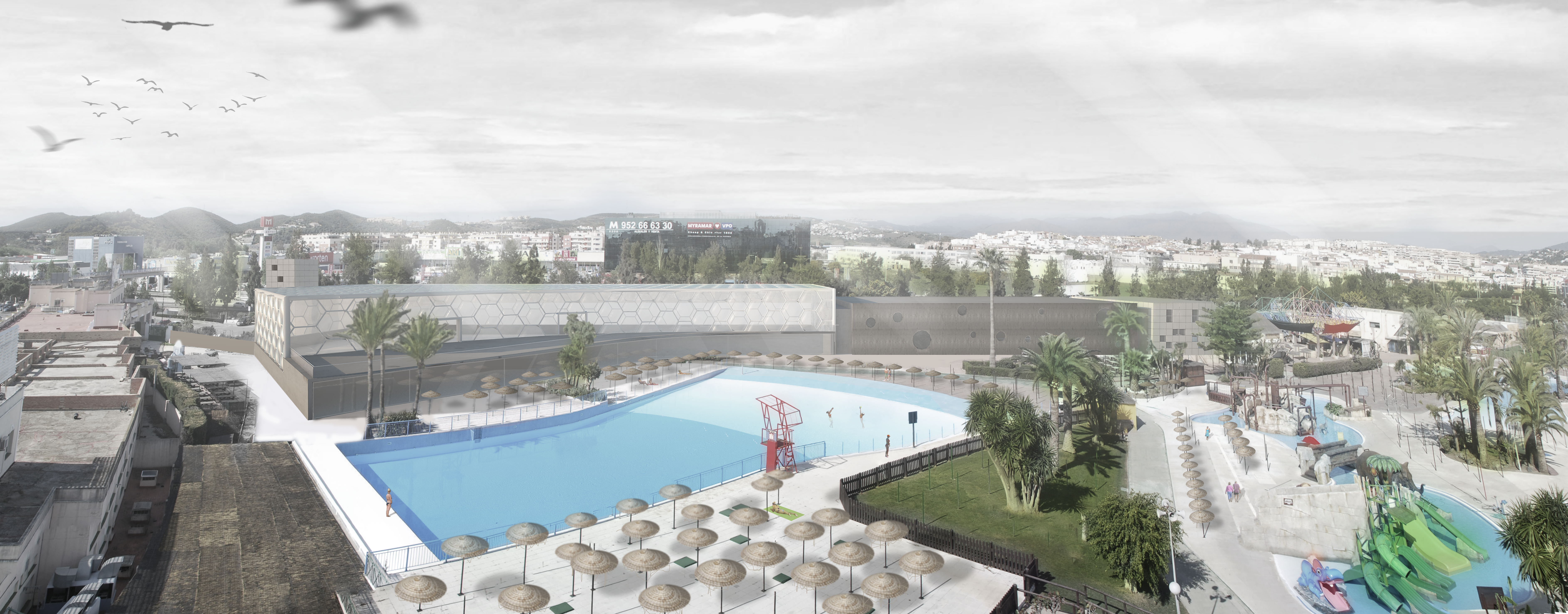
The extension project for the Aquamijas water park in Fuengirola applies this principle to a Mediterranean context. The proposal incorporates a large interior-use volume covered with an ETFE membrane that extends the park's offer throughout the year. The indoor aquatic area — with covered pools, spa area and gym — is integrated into the existing complex via a translucent roof that, by day, filters sunlight and generates a warm, bright atmosphere. At night, the building is lit from within and becomes a visual reference point on Fuengirola's coastal frontage.
ETFE here is a technical and architectural choice at the same time. Technical, because it allows the necessary surface to be covered without an excessively heavy structure and without the need for intensive maintenance in a coastal environment where the salinity of the air is an important degradation factor for other materials. Architectural, because the membrane's nocturnal behaviour — that lantern effect that emits diffuse light outwards — is part of the project's intention: to make visible from the city that something is happening inside.
A technology that will keep growing
ETFE continues to gain ground in facility architecture for reasons that go beyond aesthetics. Its carbon footprint is significantly lower than structural glass for equivalent surfaces. It is 100% recyclable at end of life. And in a context of rising energy costs, its capacity to control solar gain through sheet treatment makes it an ally for the energy efficiency of buildings.
In Spain, the number of projects incorporating ETFE in sports and leisure facilities is growing. The maturity of the technology, the gradual reduction in its costs and the accumulated experience from landmark projects like those cited make it foreseeable that this material will continue to play a central role in leisure architecture over the coming decades.
Related project
Aquamijas Water Park Extension · Fuengirola →