Sustainable architecture in the Mediterranean climate: designing well to consume less
The Mediterranean climate is, arguably, the most powerful ally an architect can have when building sustainably. More than 300 sunny days a year, mild winters, predictable prevailing winds and a moderate temperature range make Málaga and the Costa del Sol an environment where energy efficiency almost happens by itself — provided the project is designed with attention. The problem is not a lack of natural resources: it is that for decades we have built as though they did not exist.
Passive strategies: the foundation of everything
Passive design encompasses all the decisions that reduce energy demand before installing any active system. In the Mediterranean climate, the four most effective strategies are orientation, solar shading, thermal mass and natural ventilation.
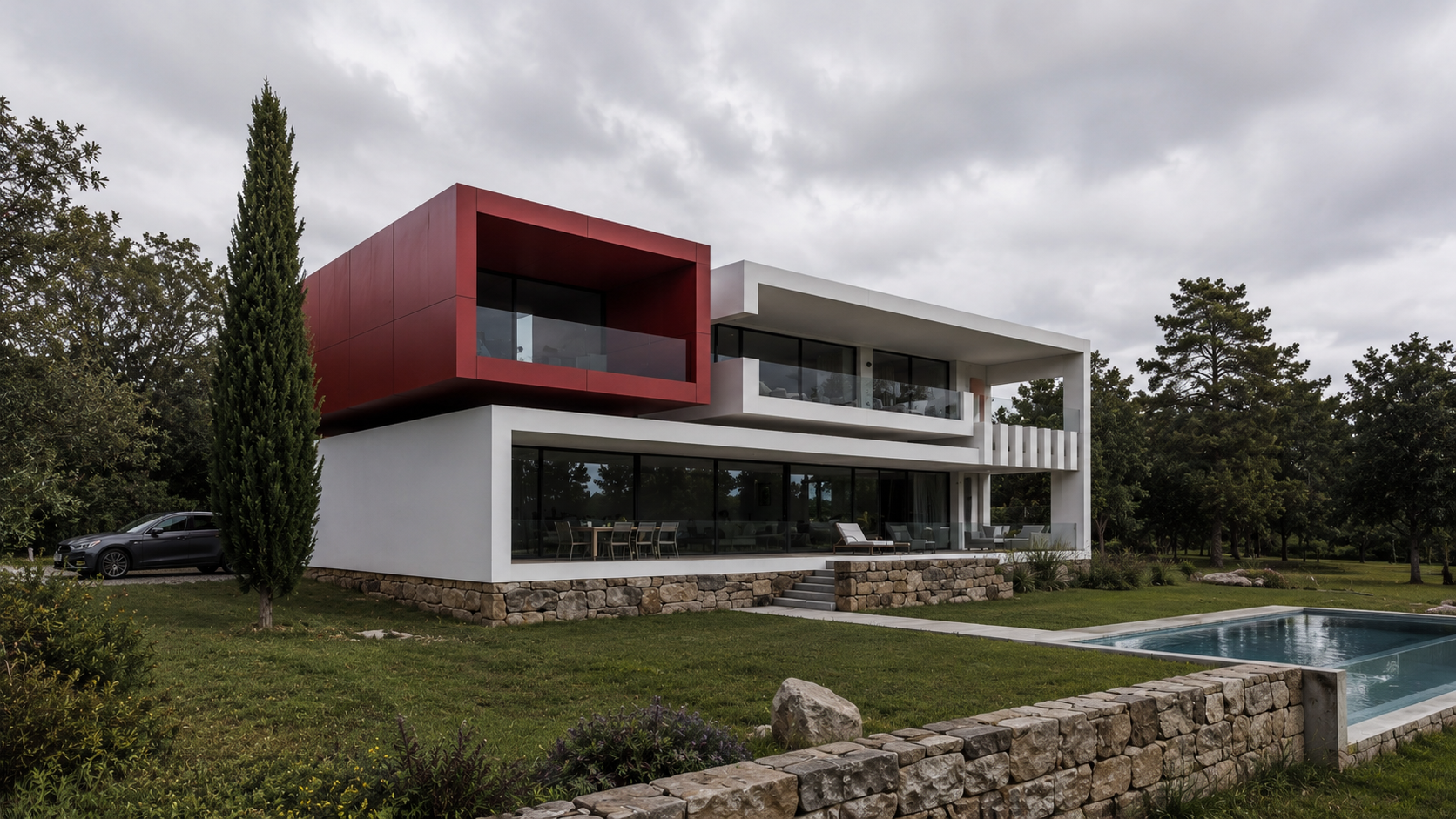
South orientation is the starting point. A main façade oriented between south and south-west captures the low winter sun — which in Málaga reaches a height of barely 30° at the solstice — while overhangs and louvres calculated for latitude 36.7°N block the summer sun, which reaches 76° at its zenith. An 80 cm overhang on a standard 2.2 m window can virtually eliminate all direct solar gain in July and August without sacrificing diffuse light.
Thermal mass — exposed interior concrete, natural stone flooring, unlined masonry walls — stores daytime heat and releases it during the cool night, reducing the interior temperature range. In a well-designed home on the Costa del Sol, interior temperature can be maintained between 21°C and 26°C for more than eight months without any active climate control system.
Cross-ventilation completes the cycle: openings on opposite façades or in the roof allow the heat accumulated during the day to be purged at night, when the outside temperature drops naturally. In Benahavís or Mijas, where the westerly breeze arrives regularly between May and September, a well-oriented project can do without air conditioning entirely for much of the summer.
Active systems: when and what to install
Passive strategies have limits. For the coldest weeks of winter and the heat peaks of July and August, we need active systems. The right choice in the Mediterranean climate is aerothermal: an air-to-water heat pump that extracts energy from the outside air — which in Málaga rarely drops below 5°C even in January — with coefficients of performance (COP) of 3 to 4.5. This means that for every kWh of electricity consumed, between 3 and 4.5 kWh of heat or cooling are produced. Gas or oil boilers have a maximum efficiency of 95%; aerothermal exceeds 300%.
Photovoltaic panels at this latitude generate between 1,500 and 1,700 kWh per kWp installed per year, well above the European average. An installation of 8–10 kWp, which fits comfortably on the roof of a medium-sized detached home, can cover 70–80% of annual consumption if the home is well designed. The surplus is fed to the grid or stored in a stationary battery.
Geothermal — buried heat exchangers that exploit the constant temperature of the subsoil — is technically superior in performance but requires available land for horizontal collectors or boreholes for vertical probes. On plots in the Málaga sierra with sufficient area, it is the most efficient long-term option.
The Mediterranean climate makes passive design easy. You just have to stop fighting it.
Energy certificate and economic value
The energy efficiency certificate (EEC) has been mandatory for selling or renting any property in Spain since 2013, but its relevance has grown significantly. European banks, under the pressure of the EU green taxonomy, are beginning to offer green mortgages with more favourable terms for homes with A or B ratings. In the Costa del Sol market, where a significant proportion of buyers are foreigners accustomed to demanding efficiency data, the certificate already influences the sale price.
The difference between an E rating — common in buildings from the 1980s and 1990s — and a B can translate into annual savings of €2,000 to €4,000 in a medium-sized home, in addition to the impact on the valuation.
The myth of sustainability as expensive
The construction premium for an energy-efficient home compared with a standard one, in our experience, ranges from 8% to 15%. For a 300 m² home with a construction cost of €600,000, that is €48,000–90,000 additional. With an energy saving of €3,500 per year, the payback period is 14 to 26 years. But the lower maintenance of installations, the higher resale value and the better mortgage terms must be added: the real payback shortens considerably.
Moreover, many of the passive measures — correctly orienting the building, properly calculating overhangs, choosing materials with adequate thermal mass — cost no more than their poorly-oriented alternatives. The cost is in the design, not in the construction.
The challenge of luxury construction
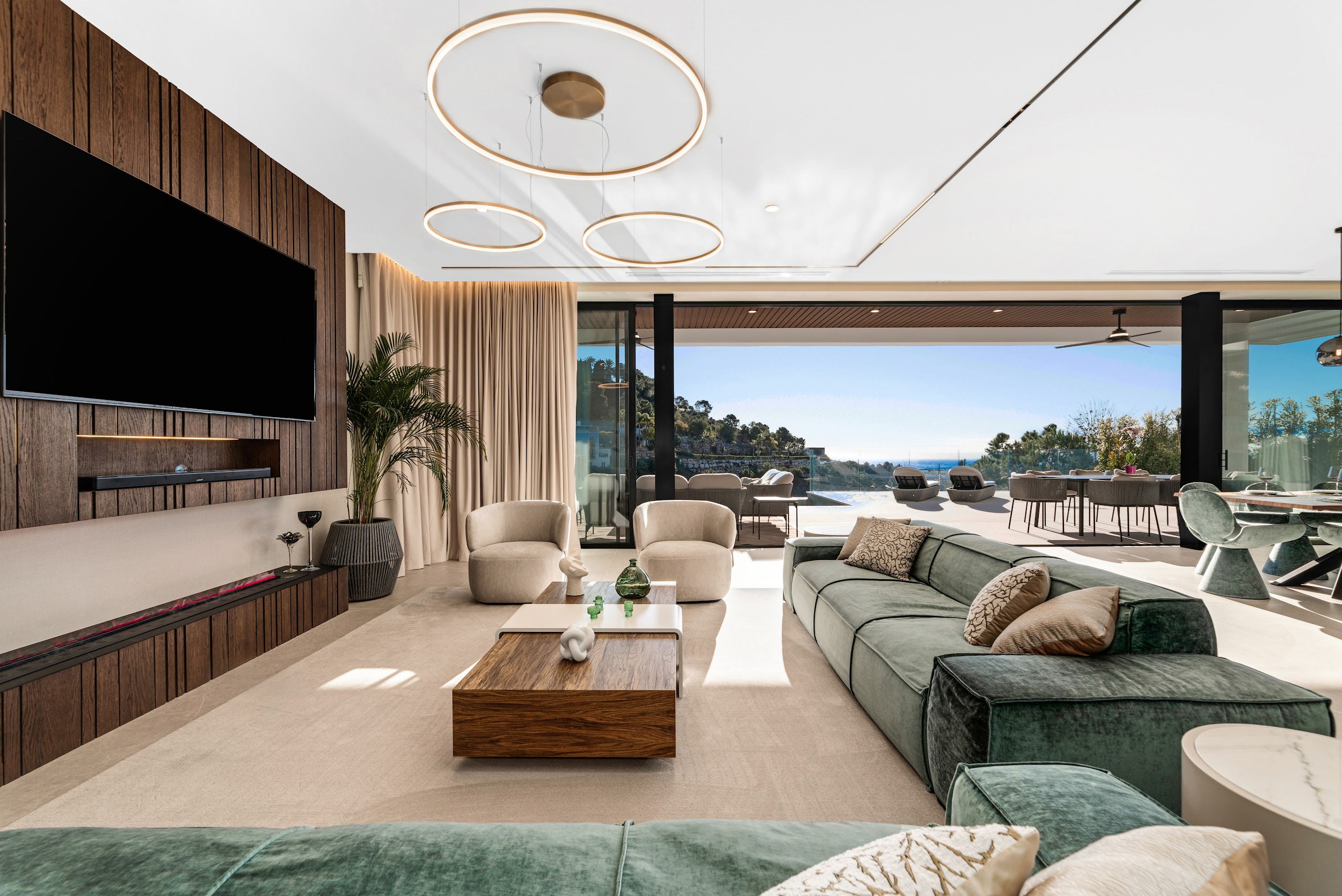
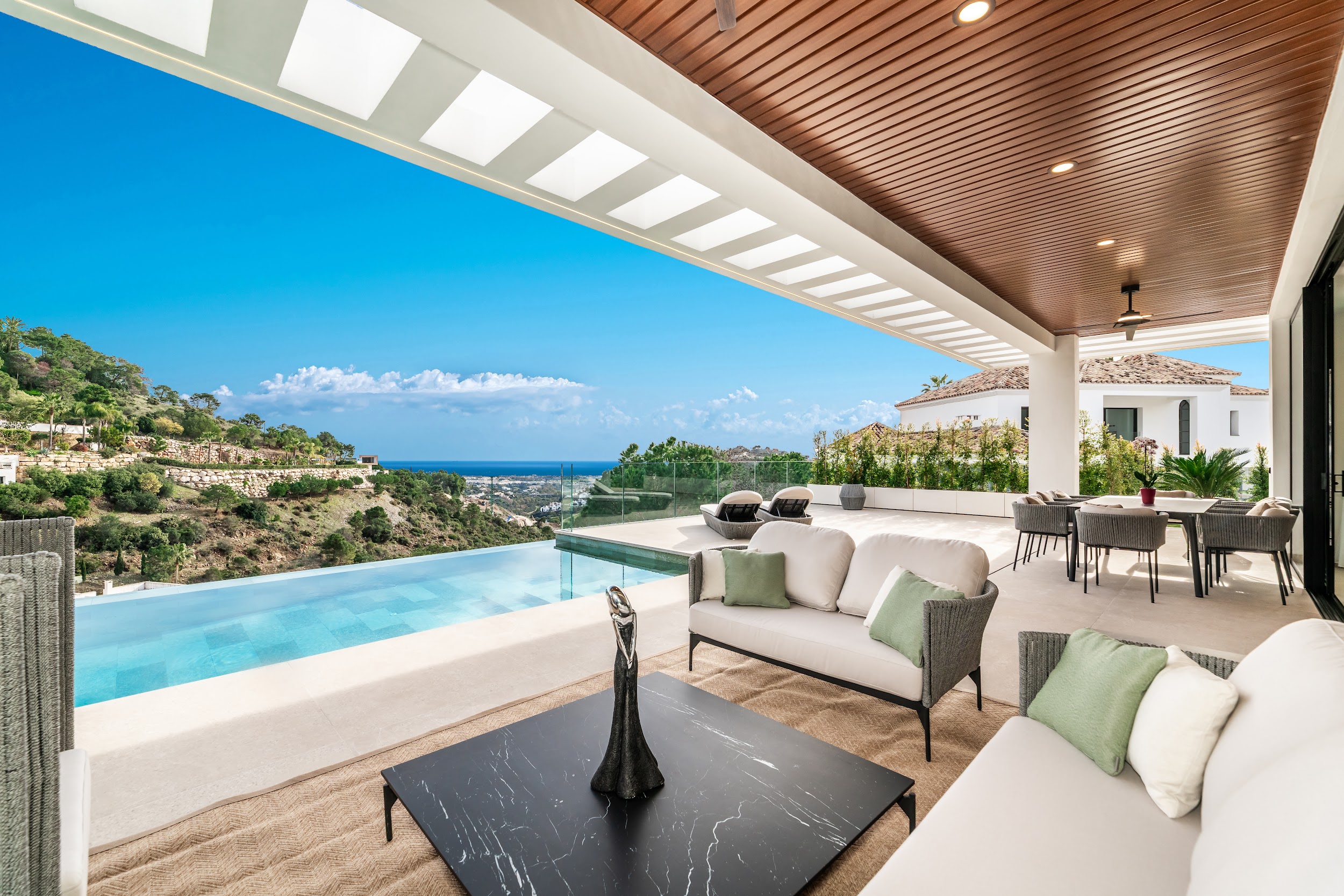
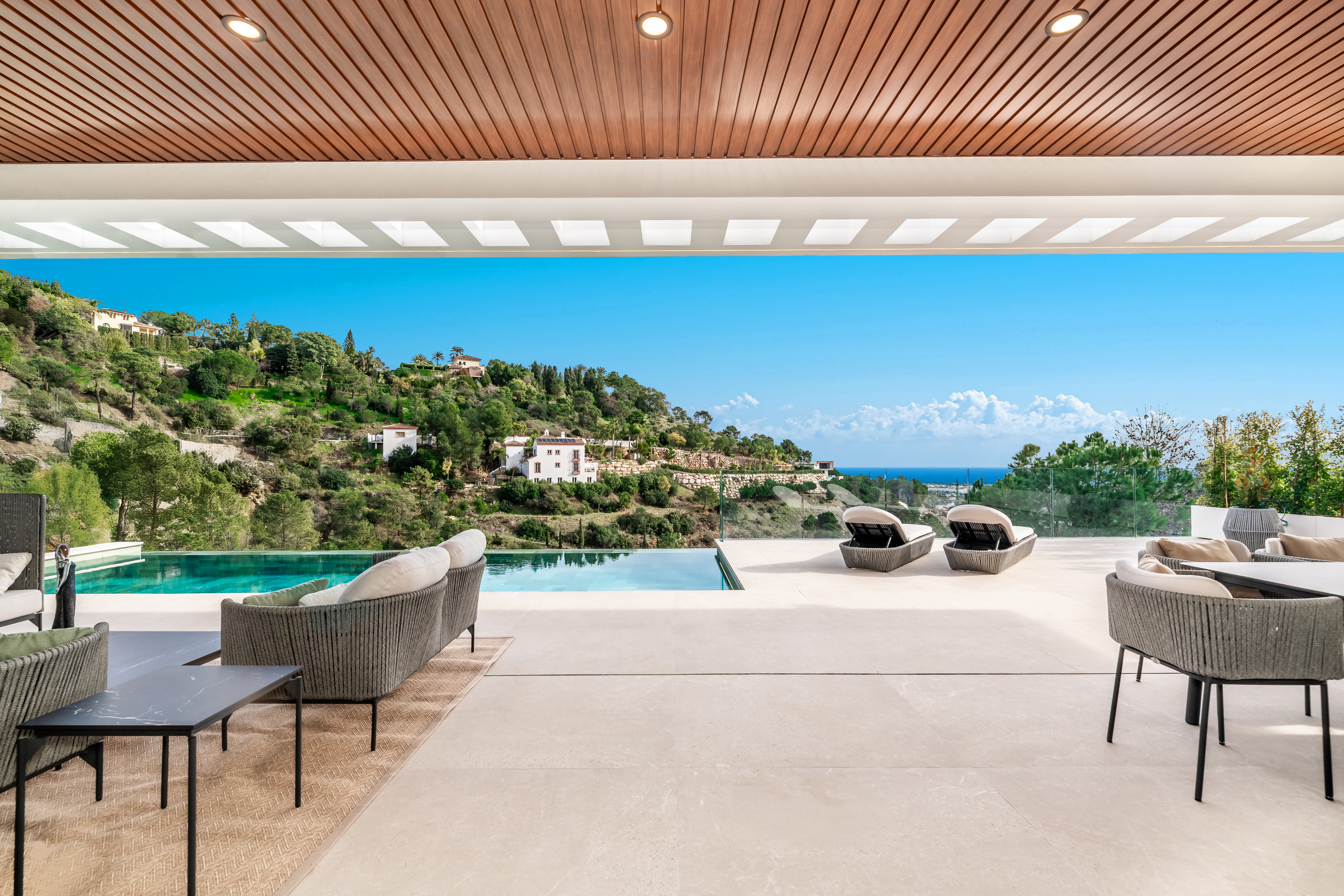
Large glazed surfaces, high-volume pools and advanced home automation are common features in the high-end residential segment on the Costa del Sol, and they represent the greatest challenges for energy efficiency. A floor-to-ceiling glass façade facing west without adequate solar protection can turn a living room into a greenhouse in July.
The solution is not to give up on glass — which is integral to view-seeking architecture in this area — but to use high-performance solar control glazing (solar factor g ≤ 0.30 on critical orientations), combine the joinery with motorised external shading, and design the natural ventilation to purge residual heat. A pool well covered with a thermal blanket at night reduces evaporation — and the energy needed to reheat the water — by more than 70%. Sustainability and luxury are not incompatible: they are increasingly the same thing.