How to improve the value of a home with architecture
Some architectural investments pay for themselves; others do not. Understanding which is which in the specific market of the Costa del Sol — where national and international buyers have fairly precise requirements — can make the difference between a renovation that adds 20% to the appraised value and one that simply updates what was already there without improving the market position.
Natural light: the intervention with the highest return
Studies of buyer behaviour in the luxury residential market consistently confirm that natural light is the most valued attribute. On the Costa del Sol, where foreign buyers — Germans, British, Scandinavians — come from climates with scarce light, the difference between a bright home and a dark one can represent between 10% and 20% of the asking price.
The interventions that most improve the natural light of an existing home:
- Removing non-structural walls: opening the kitchen into the living-dining room can transform a fragmented, dark space into a luminous and contemporary one. The cost is €2,000–5,000 (demolition, floor and ceiling repair, services); the effect on the perception of the space is radical.
- Installing rooflights: a 1×1 m rooflight on a flat roof introduces the luminous equivalent of a large-format window but without affecting views or privacy. For a windowless bathroom or a dark corridor, it can be transformative. Cost: €3,000–8,000 depending on waterproofing complexity.
- Enlarging south-facing openings: converting a standard 1.2×1.2 m window into a floor-to-ceiling door-window on a south façade costs between €1,500 and €4,000 including joinery, lintel reinforcement and new terrace finish. The difference in perception of the interior space amply justifies the investment.
Layout: the floor plan the buyer sees first
An inefficient layout — too many corridors, a closed kitchen in a peripheral position, a master bedroom without an en-suite bathroom, lack of storage — is one of the factors that most depresses the relative price of a home compared with similar properties in the same building or area. Redistributing the plan of a medium-sized home can cost between €15,000 and €40,000 (including demolition, new partitions, services, flooring and paint), but it can add between 8% and 15% to the appraised value if the result genuinely improves functionality.
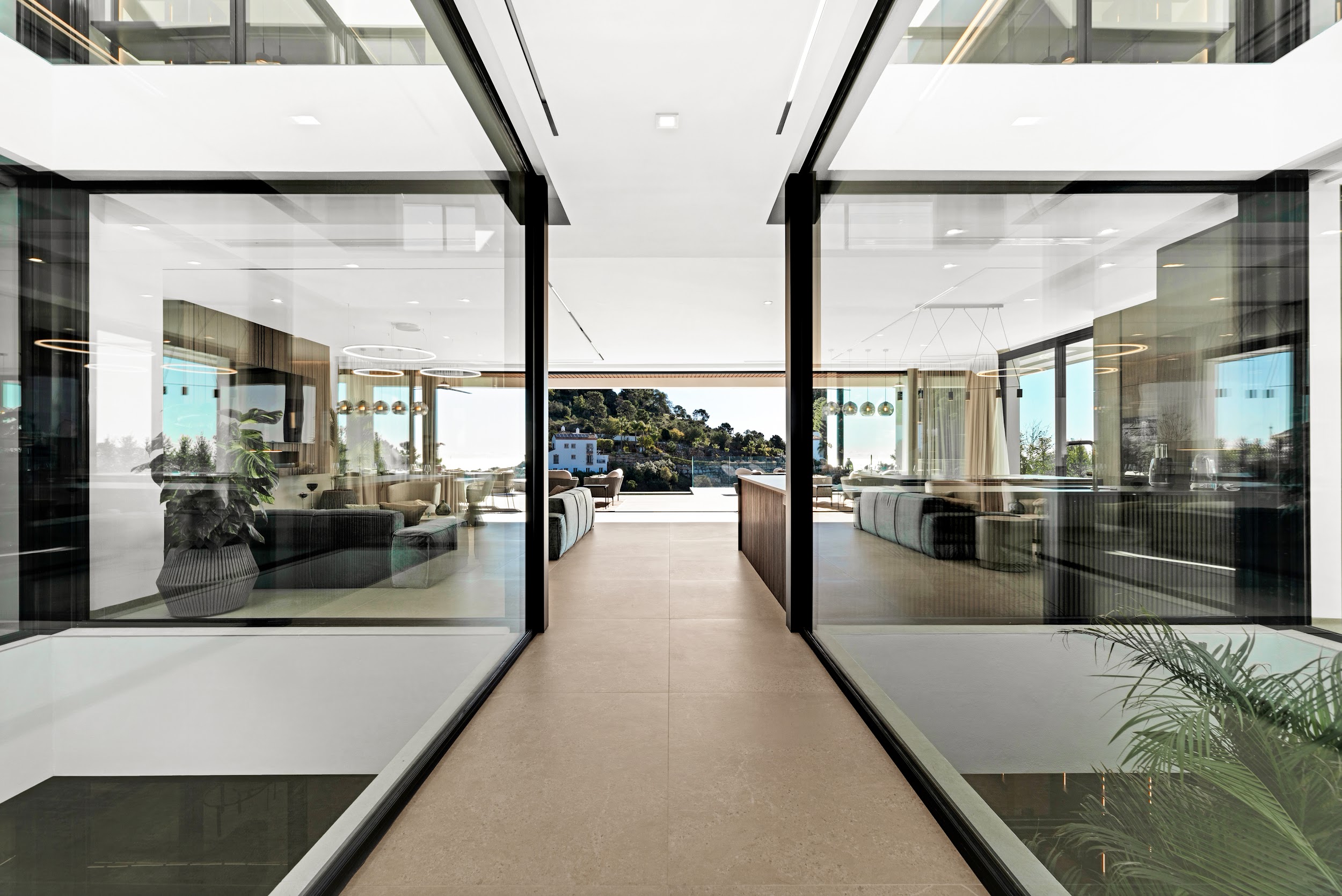
The layout patterns that work best in the Costa del Sol market: a continuous open living-dining-kitchen space with connection to the terrace; a master bedroom with dressing room and en-suite bathroom in an independent position from the other bedrooms; a guest suite with its own bathroom and separate access; and a workspace separated from the sleeping areas.
Outdoor spaces: the greatest value multiplier
In the Costa del Sol residential market, the quality of outdoor space — terrace, garden, pool — is disproportionately important compared with other European markets. A buyer coming from northern Europe or the United Kingdom is fundamentally purchasing the possibility of living outdoors for nine months of the year. A poorly designed terrace, without shade, without visual continuity with the interior and with a neglected finish, can deduct €50,000 from the value of a home that is otherwise excellent.
The interventions with the highest return in outdoor space:
- Installing or enlarging large-format sliding doors that create continuity between the living room and the terrace. Estimated return: 150–200% of the cost in added value.
- Adding a covered pergola with adjustable louvre blade systems, which allows the terrace to be used in summer without excessive heat. Cost: €8,000–20,000; impact on commercial appeal very notable.
- Improving the pool surroundings: replacing outdated paving with natural stone or stone-effect porcelain, adding underwater lighting, installing a heating system that extends the season of use. Very high return in the luxury segment.
A good architect pays for themselves in the value they add to the property. The question is not whether to hire one, but when.
Energy certification as a sales factor
In 2025, the Costa del Sol market has not yet fully incorporated energy efficiency as a purchase decision criterion, but the trend is clear and accelerating. European buyers — especially Germans, Dutch and Scandinavians — increasingly ask about the energy certificate. Green mortgages from European banks offer more favourable conditions for homes with A or B ratings.
Taking a home from an E or F rating (common in homes from the 1980s and 1990s) to a C or B rating through improved roof and façade insulation, replacement of windows and installation of aerothermal heating can cost between €20,000 and €60,000 in a medium-sized single-family home. The energy bill saving is €2,000–4,000 per year, and the impact on appraised value, once the market fully recognises it, can be 5–10%.
Kitchen and bathrooms: the quality you can touch
Buyers touch, open, feel. A kitchen with a quartz composite worktop, soft-close drawers, integrated high-end appliances and a well-proportioned island creates an immediate impression of quality that carries over to the overall perception of the home. The return on kitchens is high provided the choice is genuinely high quality and well executed, and low when it is over-specified in a market that will not value it (an €80,000 kitchen in a €300,000 apartment will not recover the excess cost).
Bathrooms have a similar return: the double vanity, the large walk-in shower flush with the floor, the large-format floor and walls in a single material, the well-resolved lighting — not just the mirror sconce — are the elements a buyer remembers. The cost of a well-renovated bathroom ranges from €8,000 to €20,000; the impact on the perception of the home is far greater than that cost.
What is not worth investing in
Certain investments have a very low return in the Costa del Sol market: over-specifying finishes in a mid-range home that the market will not value; adding bedrooms that create an 8 m² room without its own window; personalising with strong colours, unusual materials or very distinctive aesthetic choices that the future buyer will need to undo; or investing in improvements to the home without improving the common areas of the building, when these are the first thing a prospective buyer sees.
The valuation process: how to document improvements
An accredited valuer assesses the home by comparing it with recent transactions of similar properties and adjusting for qualitative differences. Architectural improvements that are not documented may not be reflected in the valuation. To maximise recognition of the improvements made, it is useful to have: a project signed by an architect describing the works, installer certificates for the services element, before-and-after photographs, and invoices for the main materials. A technical report by the same architect who signed the project can support the argument before the valuer.